
Bridging Research and Action: Food Rescue US Partners with RECIPES
At Food Rescue US, our mission has always been simple but powerful: rescue fresh, usable food that would otherwise go to waste, and deliver it to individuals and families who need it most. Along the way, we’ve seen how food recovery benefits communities, supports food security, and reduces the environmental burden of waste. Now, thanks to a new research partnership with RECIPES (Resilient, Equitable and Circular Innovations with Partnership and Education Synergies), we’re combining our on-the-ground action with groundbreaking academic research to better understand the “why” behind food recovery; and how we can make our efforts even more effective.
What is RECIPES?
RECIPES is a National Science Foundation–funded initiative led by American University, bringing together more than 40 researchers across 14 academic institutions. Their work takes a comprehensive look at food waste, tracing its causes and consequences across the supply chain.
With a focus on resilience, equity, and circular solutions, RECIPES is studying how food recovery and redistribution can reduce waste, strengthen communities, and improve access to nutritious food. Just as importantly, they’re exploring the human side of food recovery: what motivates people to take action and what barriers prevent them from doing so.
Why Our Volunteers Step Up
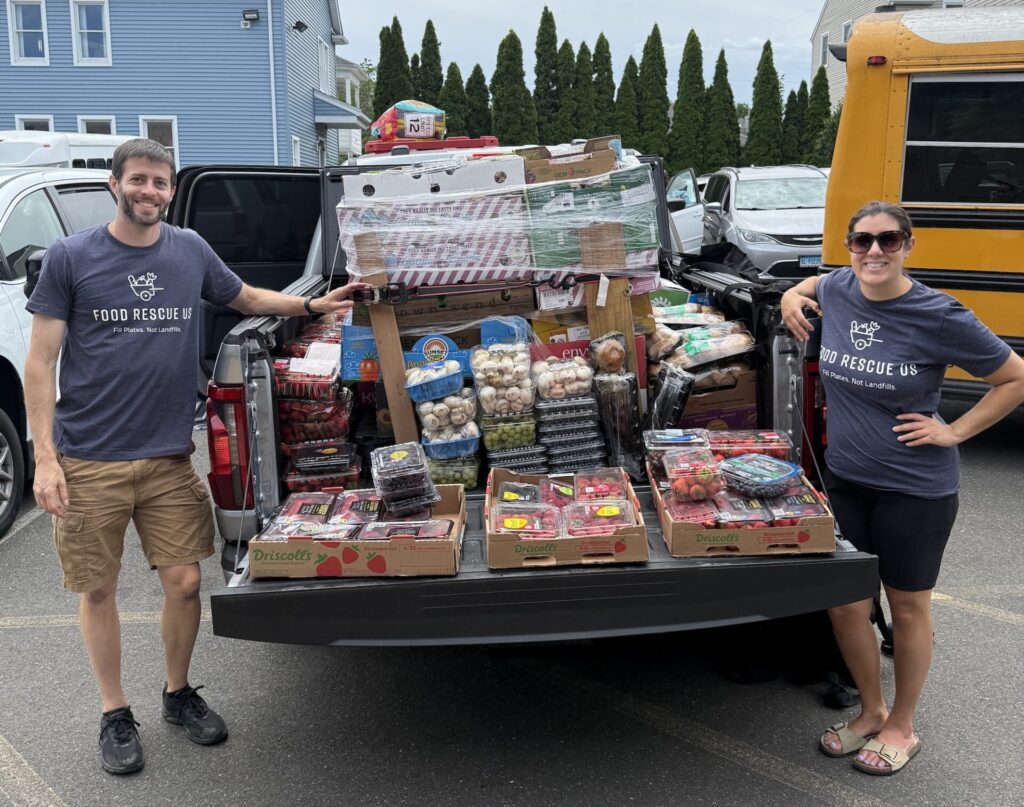
As part of our partnership, we surveyed volunteers at 16 food recovery sites across 23 counties to learn more about what drives them to join us in this work.
One of the most compelling findings was how volunteers responded to a question that was designed to explore why they join us in this work. Respondents were given a list of statements and asked to indicate how strongly they agreed or disagreed with each. Almost across the board, the statement volunteers agreed with most strongly was “food recovery volunteering is aligned with my values”. This finding affirmed what we’ve long observed in our community: rescuers don’t just show up; they show up with purpose.
- 95% of volunteers believe food recovery has a significant environmental impact. They see themselves not only fighting hunger, but also addressing climate change and resource waste.
- Local impact matters. A majority of respondents reported that they had seen concrete improvements in their own communities thanks to food recovery efforts.
- Volunteers strongly felt that their actions could make a difference in society, reinforcing the sense of agency and empowerment that comes from rescuing food.
In short, food rescue resonates with people’s values, environmental concerns, and their desire to build stronger communities.
A Vision for the Future
The insights from this research go beyond data, they’re shaping how we grow.
- Recruitment: By emphasizing the values that resonate most with volunteers, we can reach new people who share the same passion for sustainability and community change.
- Retention: When we highlight the aspects of volunteering that rescuers find most meaningful, we strengthen their connection to the mission, helping them stay engaged for the long term.
- Impact: Every new and returning volunteer means more food saved from landfills, more meals delivered, and more support for local communities.
Ultimately, this partnership demonstrates the power of combining research and action. With RECIPES, we’re learning not just how to rescue more food, but how to build a volunteer movement rooted in purpose, resilience, and equity.
Join the Movement
The future of food recovery depends on all of us—researchers, rescuers, donors, and community members alike. If you’d like to be part of this growing effort, sign up to volunteer, share our mission, or support Food Rescue US in other ways. Together, we can continue building a food system where surplus food feeds people, not landfills.